Posted by Susan Armadale
Filed in Business 60 views

If you’ve got a place by the water, you already know it’s not just property — it’s a lifestyle. The sound of waves, that cool breeze, maybe a quiet morning with coffee watching the sunrise. But you also know the water can be rough on everything you own. That’s why most waterfront folks eventually start thinking: maybe I need a proper dock, or even a boathouse. Not just any — a custom boat house or a floating dock that fits you.
Because let’s face it, one-size-fits-all never really fits. Especially not when it comes to the shoreline you’ve worked hard for.
You could grab a prefab dock kit online. Bolt it together over a weekend. But you’d be back out there next year tightening bolts, replacing warped boards, maybe wondering why it doesn’t quite sit level anymore.
That’s where custom boat houses and floating docks come in. They’re built for your site — your slope, your tides, your style. You don’t get that with prefab. A custom build means the materials, design, and structure are matched to the conditions right at your shoreline. That’s the difference between a dock that lasts five years and one that lasts twenty.
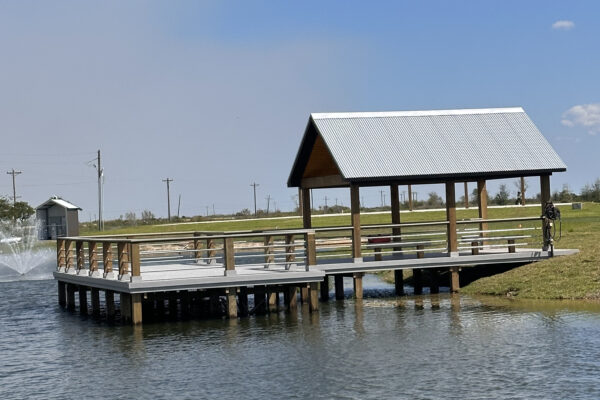
People hear “boathouse” and think storage shed on the water. But custom boathouses are so much more now. Think outdoor living spaces, built-in lifts, bars, lighting, even covered lounges. It’s not just a spot to park your boat — it’s an extension of your home.
You can have a wraparound deck, a place to fish, swim, or entertain. Some homeowners even turn the upper deck into a patio with a grill or hot tub. The whole point is customization. A custom boat house fits your needs, your family, your weekends.
Floating docks don’t get enough credit. They’re the flexible, go-anywhere solution of the waterfront world. Unlike fixed docks, floating docks rise and fall with the water. No more worrying about fluctuating lake levels or tides. They adjust naturally.
They’re great for locations with soft or deep bottoms where driving piles isn’t easy. And they can be moved or expanded later. Modular floating systems make it simple to add a kayak launch, a swim platform, or extra boat slips. You can start small and build over time.
When it comes to docks and boathouses, materials are everything. Aluminum, steel, treated wood, composite decking — they all have pros and cons. Aluminum is light and resists corrosion. Wood looks beautiful but needs upkeep. Composites are low maintenance but can get pricey.
A good builder will walk you through it, not just sell you what’s easy for them. Every shoreline is different. Saltwater eats through metal faster. Sunlight warps cheap decking. And high winds? They’ll rip out poor anchoring in one season. The best custom boathouses and floating docks start with the right materials for your exact conditions.
Some people want a quiet fishing dock. Others want a party platform. Families with kids might need rails and non-slip decking. Serious boaters need lifts, power, and storage.
That’s the beauty of custom design. You don’t have to compromise. Your floating dock can have integrated lighting, cleats where you need them, or solar charging stations. Your custom boathouse can have utility hookups, security systems, or a lounge upstairs.
It’s not about building fancy — it’s about building right.
You can have the best design in the world, but if it’s installed wrong, it’s junk. Period. The piles need to be driven deep. The anchoring system has to handle your water movement. Electrical and lift systems must be weatherproof and code-compliant.
That’s where professional dock builders earn their keep. Companies like Dream Boat Docks don’t just build pretty structures — they engineer them to survive the real world. Because nothing’s worse than watching your dock float away in a storm.
Here’s something most new dock owners learn too late: good construction saves years of maintenance headaches. If your dock or boathouse is designed with proper drainage, UV-resistant coatings, and easy-access components, upkeep becomes minimal.
Pressure washing once a season, a quick check on fasteners, and a little touch-up on finishes — that’s it. But if corners are cut early, you’ll spend more time fixing than relaxing. That’s why “cheap now” usually means “expensive later.”
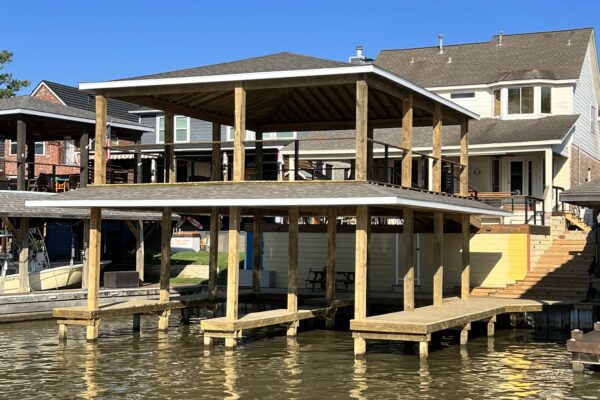
A custom boat house or floating dock isn’t just a luxury. It’s a serious property value booster. Real estate agents will tell you — waterfront buyers love ready-to-enjoy access. A home with a durable, beautiful dock can appraise significantly higher.
It also increases use value. You’ll spend more time outside, more weekends with friends, more sunsets by the water. It’s lifestyle return — the kind you can’t put a price on.
It depends. For deep lakes or variable water levels, floating docks win every time. They’re flexible and easier to adjust or relocate. For shallower, calmer waters, fixed docks are rock solid and feel permanent underfoot.
Sometimes, a mix works best — a fixed base with a floating extension. That’s the kind of smart hybrid design that comes from working with a custom builder, not a catalog order form.
Building a custom boat house or floating dock isn’t a DIY job. It takes engineering know-how, proper permits, and experience handling local water conditions. You want a builder who listens, not just sells. Someone who’s done it before — in your type of water, with your kind of budget.
That’s why Dream Boat Docks keeps popping up in conversations around quality waterfront builds. They’ve seen it all — storm surges, shifting soils, harsh tides. And they don’t overpromise. They just deliver tough, functional, beautiful waterfront structures that last.
Here’s the thing: no perfect time will ever show up. If you’ve been dreaming of that custom boat house or floating docks, start planning now. Designs, permits, materials — they all take time. But when next summer rolls around, you’ll thank yourself.
You’ll be sitting out there, feet dangling in the water, drink in hand, thinking — “Why didn’t I do this sooner?”
Visit Dream Boat Docks to start your custom design today.
Q1: What’s the difference between a floating dock and a fixed dock?
A floating dock adjusts with water levels, ideal for lakes and tidal areas. Fixed docks are anchored with piles, great for stable water depths.
Q2: How long does a custom boat house take to build?
Usually between 6 to 12 weeks, depending on design, permits, and weather conditions.
Q3: Can floating docks handle rough weather?
Yes — when anchored correctly with quality materials. Modern floating docks are built to withstand waves, currents, and seasonal shifts.
Q4: How do I maintain my custom boat house?
Regular cleaning, checking for corrosion, sealing wood surfaces, and inspecting lift systems yearly.
Q5: What makes Dream Boat Docks different from other builders?
Experience, customization, and craftsmanship. They design for real-life waterfront conditions, not just for looks.



