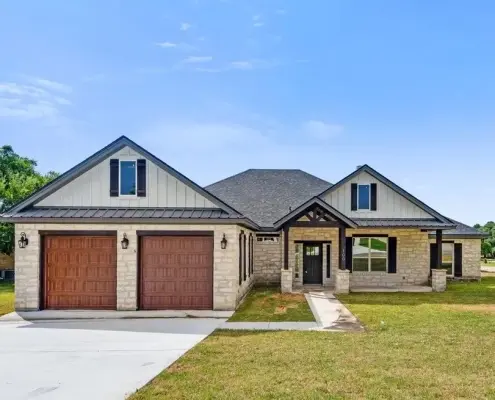
Austin’s construction scene has been busy for years now, maybe even a little chaotic if we’re being honest. Prices jump, timelines slip, and contractors are booked out forever. In the middle of all that, the phrase
design build Austin Texas " keeps popping up more and more, and there’s a reason for it.
It’s not some fancy trend thing. It’s just a different way of handling projects where design and construction aren’t fighting each other from day one. One team, one contract, less back-and-forth. Sounds simple, but in real life, it changes a lot.
I’ve seen projects drag on because the architect and builder weren’t on the same page. Then you’ve got change orders stacking up, delays, frustration… and yeah, the budget slowly bleeding out. Design-build tries to cut through that mess. Not perfectly, nothing ever is, but noticeably.
Why design-build actually fits Austin’s building chaos
Austin isn’t a slow market. It moves fast, sometimes too fast. Land values shift, labor costs swing, and if you blink, your “budget home” isn’t budget anymore.
This is where design-build starts making sense. Instead of hiring an architect, then shopping around for a builder, then realizing they don’t agree on half the details… You bring it under one roof from the start.
There’s less translation needed. Fewer “well, the architect didn’t think about that” conversations. And honestly, that alone saves weeks.
It also helps with decision fatigue. Homeowners don’t always realize how many tiny choices pile up in a build. Door swings, framing details, foundation tweaks. When teams are split, every one of those becomes a phone call chain. In a design-build setup, those decisions get handled faster, sometimes the same day.
And yeah, it’s not magic. Bad teams still do bad work. But a coordinated one? It just moves cleaner.
How the process actually saves time (not just theory)
Time savings in design-build aren’t dramatic at first glance. It’s not like you shave six months off overnight. It’s more subtle.
For example, while plans are being drawn, the builder is already giving input. “That window spec is going to cost you more,” or “we can simplify that framing detail.” So when permits hit, you’re not redesigning things. That alone cuts down revision loops, which are a silent killer in traditional builds.
Then there’s scheduling. One team controlling design and construction means fewer gaps where nobody knows who’s responsible. In traditional setups, you get that awkward pause where the architect says, “Talk to the builder,” and the builder says, “That wasn’t in my scope.” Days or weeks lost right there.
Austin’s permit process can also slow things down, no surprise there. But when drawings are tighter and more build-ready from the start, approvals tend to move with fewer corrections.
It’s not perfect; sometimes things still stall. But the flow is smoother, less stop-and-go. And in construction, stop-and-go is what eats your timeline alive.
Where the money gets saved (and where it doesn’t)
Let’s be real, everyone wants to know about cost. Does design-build actually save money, or is it just packaged differently?
It can save money, but not in a “cheap build” way. More like fewer leaks in the system.
When design and construction are separate, miscommunication turns into change orders. Change orders are expensive. They add up quietly, too, like death by a thousand cuts. Design-build reduces that because the builder is already part of the design conversation.
Also, material choices get more realistic early on. Instead of designing something beautiful that costs way too much to actually build, you get adjustments upfront. That’s a big one.
Now, it doesn’t always come out cheaper on paper at the start. Sometimes the initial bid looks similar or even a bit higher. But the final number? That’s where design-build often pulls ahead.
Still, you can’t ignore scope creep. If you keep upgrading finishes mid-project, no system saves you from that. That’s just reality.
And for people looking into new construction homes in Austin, this approach can be a safer landing spot. Especially first-time builders who don’t want to juggle ten different contracts and hope everything aligns.
Real-world fit for homeowners and investors
Design-build works differently depending on who’s using it.
Homeowners usually care about stress. They don’t want to babysit a project. They want updates that make sense and a house that actually matches what they imagined.
Investors, on the other hand, care about timing and predictability. If a project slips three months, that’s money gone. Carrying costs, interest, and missed rental income. So having one accountable team matters a lot more than people think.
In Austin, I’ve seen both groups lean into design-build because the alternative just feels risky now. Too many moving parts otherwise.
But I’ll say this too, it’s not a cure-all. You still need good communication. You still need someone asking the uncomfortable questions early. Otherwise, you just get a smoother version of the same problems.
Conclusion: why it keeps gaining ground
At the end of the day, design-build isn’t complicated. It’s just less fragmented. And in a fast-moving city like Austin, that matters more than fancy explanations.
The approach keeps design and construction aligned from day one, which means fewer surprises and fewer budget shocks. Not zero problems, just fewer of the avoidable ones.
For anyone looking at
new construction homes in Austin, it’s worth paying attention to how a project is structured before anything else. The system behind the build often matters more than the design itself.
And yeah, design-build won’t fix everything. But it does make the whole process feel a bit more human, a bit more direct. Less waiting around, less guessing. In this market, that alone is a win.